
Bandhavgarh  national park banner
Bandhavgarh home banner

Welcome to Bandhavgarh National Park

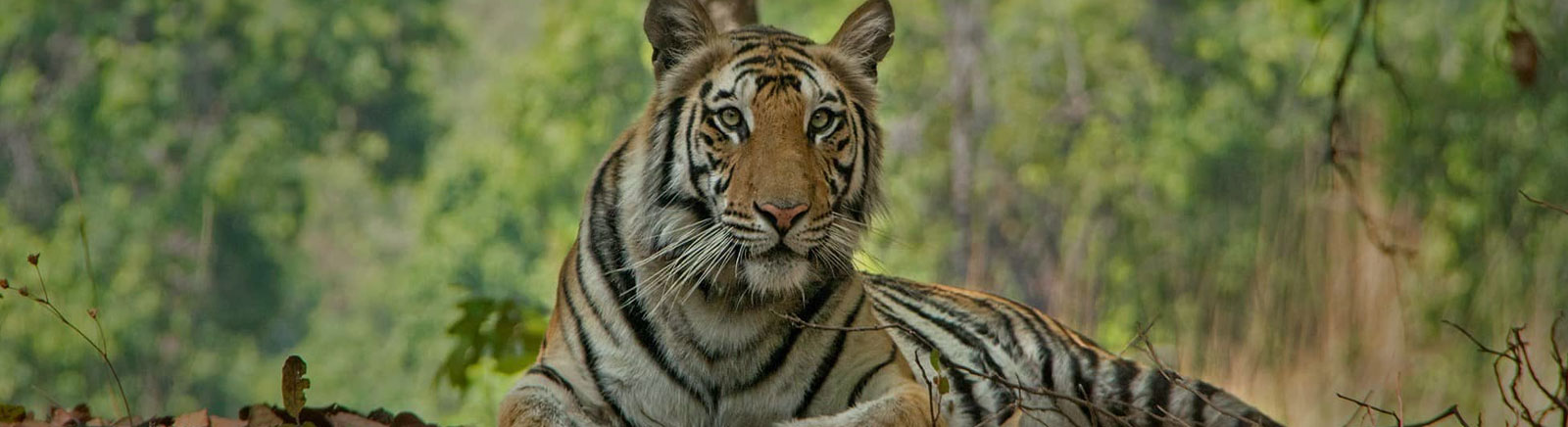
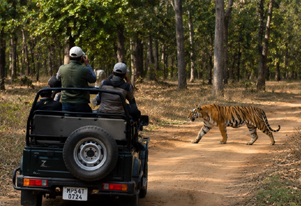
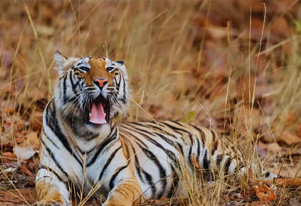
Once the royal hunting reserve of the Rewa dynasty, Bandhavgarh National Park is now one of India’s most celebrated tiger habitats and is especially known for its association with the rare white tiger. Dominated by the historic Bandhavgarh Fort, the park offers breathtaking panoramic views of the surrounding forests, where tiger sightings are frequent and highly rewarding for wildlife enthusiasts.

Spread across nearly 1536 square kilometers, the park includes a core area of about 716 square kilometres. Located at an altitude ranging from 410 to 810 meters, the landscape is enriched by around 20 streams that eventually flow into the Son River, a major tributary of the Ganges. The park is further enhanced by natural lakes, rocky caves, dense forests and open grasslands, creating an ideal habitat for a rich diversity of wildlife and bird species. Due to its high chances of wildlife sightings, Bandhavgarh attracts a large number of Indian and international tourists every year.

Wildlife at Bandhavgarh

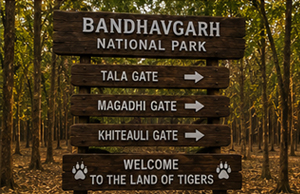
Situated in the Vindhya Hills of Umaria district, Bandhavgarh National Park is divided into four main tourism zones — Tala, Magadhi, Khitauli and Panpatha. Among them, Tala is the most popular because of its excellent tiger sighting opportunities. The Magdi zone is also well known for elephant safaris and jungle excursions that offer visitors a chance to witness the elusive big cats in their natural environment.

Tourists Attractions at Bandhavgarh National Park :


Bandhavgarh Fort

Bandhavgarh Fort

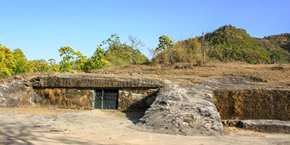
As we know that Bandhavgarh is known for wildlife activities worldwide but part from this there are such tourist pinch place where you can explore and make your tour memorable. Bandhavgarh fort is among them. It is strategically situated in the centre of the thirty two hills in the park with its peak going as high as 800 meter. Dating back to prehistoric times there are several caves which can be explored during the visit of Bandhavgarh fort. Kept in the list of one them oldest fort in India unfolds the legendary of Maryada Ram in Ramayana. It is derived from the Sanskrit word Bandhav – Means Bhai or Brother and Garh means – Kila or Fort.

Baghel Museum

Baghel Museum

If you are touring such wildlife destination in India then place like museum situated around must be explored. Baghel Museum at Bandhavgarh is one such place of knowledge if you are interested in knowing wildlife history of the magical land. This museum preserves the historical assets of Maharajas of Rewa. It is a great royal mansion where important belongings of Maharajas of Rewa are kept in display that depicts his legacy of that time. The one particular corner of the museum showcases the stuffed body of the first white tiger named Mohan which was first spotted by the Maharaja of Rewa.

Tala Village Bandhavgarh

Tala Village Bandhavgarh

Whenever we are talking about Bandhavgarh tour so it is incomplete without mention of Tala Village. Whether it is how to reach, main reaching point of the tourists or we are discussing about most popular safari zones of the Bandhavgarh, it cannot be discussed without the name of the Tala village. Hence, Tala is the epicentre of all tourism activities done here. You can see the complete reflection of the Indian village which teaches you the most ethnic way of village living and lifestyle. You may choose a day to spend in this Tala village. The mud clustered houses and even modest dwellings, elders enjoying hookas and many more will take you back to the early village life.

Shesh Shaiya

Shesh Shaiya

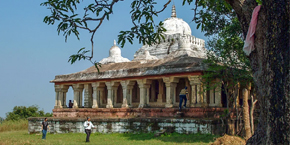
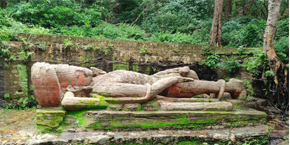
Lord Vishnu Statue - A famous attraction inside the park, Shesh Shaiya features a massive reclining statue of Lord Vishnu resting on the serpent Sheshnag. A natural water stream flows nearby, adding to the spiritual and scenic beauty of the place. It is one of the magnificent statue of Lord Vishnu lying on the Shesh Nag which dates back to the 10th century and attracts ample of tourists every year coming to explore Bandhavgarh National Park. The statue also depicts the moorti of Brahma and Shiva (Shivlinga) completing together the holy trinity. The holy river flowing Charan Ganga originates from the foot of Lord Vishnu.

Safari & Wildlife

Safari & Wildlife

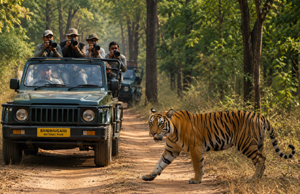
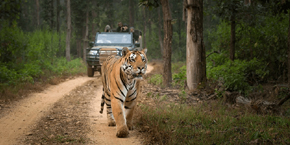
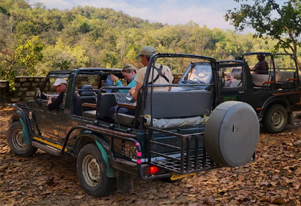
Compared to other forms of seeing the wildlife, jeep safaris are preferred as they are cheaper, easily available and the best way to explore the wilderness. These are available in 2 shifts; morning (around sunrise) and evening (close to sunset) for a duration of around 4 hours. Each jeep can accommodate 6 travellers apart from a guide and driver.

Why should you visit Bandhavgarh National Park ?

Bandhavgarh was the hunting reserve of the royal family of Rewa, with the Maharaja of Rewa hunting wild cats to relieve the population from their terror. Post-independence, the state merged with Madhya Pradesh, however, the royal family had the rights to the region of Bandhavgarh. Since no measures were taken to prevent the destruction of forests and wildlife, the region was handed over to the government and the 105 sq. km. area was declared a national park in 1968. Poaching was prohibited and construction of small dams and watering holes was done to help improve the condition of the wildlife. In 1982, the area was increased to 448 sq. km. to provide shelter to increasing wildlife including tigers.

In 1993, the Bandhavgarh National Park was declared a tiger reserve under project tiger and the area was extended further up to 694 sq. km. including a 437 sq. km. buffer zone. The place has a high density of tiger population and is also the breeding ground for leopards and various deer species. As per the census of 2001, the tiger density in Bandhavgarh National Park in tourist zone is high (1 tiger per 4.77 sq km.) the caves present in the region are ideal for protecting the cubs.

Wildlife which can be observed at Bandhavgarh National Park

Flora – Sal, bamboo, Saj, Tendu, Arjun, Palas, Amla, Mango, Jamun, Khajur, Ber, Babul, Banyan, Dhak, Kadam, Neem, Mahua, Khejda, Kakera, etc.

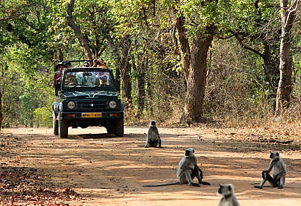
Fauna - Mammals: Royal Bengal and White Tiger, Asiatic jackal, Bengal fox, common langurs, rhesus macaque, sloth bear, grey mongoose, striped hyena, jungle cat, leopard, chaurasingha, nilgai, chinkara, gaur, mongoose, dhole, small Indian civet, palm squirrel, lesser bandicoot rat, wild pigs, spotted deer, sambhar, barking deer, wild boar, ratel, little grebe

Reptiles - Python, turtle, rat snake, viper, cobra, turtle, various lizard species including Varanus.

Birds - Dove, parakeet, crested serpent eagle, black vulture, common peafowl, sarus crane, egret, red jungle fowl, white breasted kingfisher, common teal, black and Egyptian vulture, grey hornbill, parakeet, black kite, Indian roller, adjutant etc.

Safari available at Bandhavgarh National Park

The best time to visit Bandhavgarh National Park is from October to May. You can opt for a jeep, canter or elephant safari to enjoy the wildlife of the region. The morning and evening safari timings are from 6.30 a.m. – 11 a.m. and 2.30 p.m. – 5.30 p.m. from 15th October-15th February; 6.00 a.m. – 11 a.m. and 3.00 p.m. – 6.00 p.m. from 16th February – 31st March and from 5.30 a.m. – 10 a.m. and 4.00 p.m. – 7.00 p.m. from 1st April – 30th June.

Best Time to Visit Bandhavgarh National Park

While visiting Bandhavgarh National Park you get to witness the typical North Indian Monsoon climate, with temperatures dipping as low as 20 deg C in winters and going as high as 45 deg C in summers. The region receives an average rainfall of 1200 mm. Southern cyclones between November and February contribute to rains in the region. The best time to visit the national park is between November and March as the weather remains pleasant. However, the chances of Royal Bengal tigers prowling the land are more in the summer months of April, May and June. The park remains closed during monsoon from 1st July to 15th October.

Some Useful Details About the Bandhavgarh

  • 1. Total Approx Green Jungle Area – 1536 Square Kilometres
  • 2. Core Safari Area – 716 Square Kilometres
  • 3. Buffer Safari Area – 820 Square Kilometres
  • 4. Forest Type – Grasslands, Mixed forest and deciduous forest
  • 5. Rivers Flow – Charanganga, Johilla, Janadh, Damnar
  • 6. Hills – Bandhavgarh Hill – 811 Metres above sea level
  • 7. Annual Rainfall observed – Approx 1133 mm
  • 8. Average Annual Temperature – 24 Deg Cel to 26 Deg Cel

Reaching Bandhavgarh from Different Cities

  • 1. Distance from Delhi to Bandhavgarh – 912 Km
  • 2. Distance from Maihar to Bandhavgarh – 195 Km
  • 3. Distance from Jabalpur to Bandhavgarh – 200 Km
  • 4. Distance from Katni to Bandhavgarh – 100 Km
  • 5. Distance from Khajuraho to Bandhavgarh – 250 Km
  • 6. Distance from Nagpur to Bandhavgarh – 490 Km
  • 7. Distance from Umaria to Bandhavgarh – 35 Km
  • 8. Distance from Kanha to Bandhavgarh – 250 Km

How to Reach Bandhavgarh National Park?

By Air

The nearest airports are Jabalpur airport (190 km) and Khajuraho Civil Aerodrome (250 km). Both these airports are well connected to major Indian cities. You can easily hire taxis or hail bus to reach your destination.

By Road

Both private and state transport buses as well as taxis are available to reach the national park from major cities of M.P. including Umaria (37 km), Katni (100km), Jabalpur (190 km) and Khajuraho (250 km).

By Train

The nearest railway station is Umaria which is 37 km from Bandhavgarh National Park. Other railway stations which are well connected to major cities and located close to the national park include Katni (100 km), Jabalpur (190 km) and Khajuraho (250 km).

Tips while visiting Bandhavgarh National Park

  • Since Bandhavgarh National Park is extremely popular, advance booking of safari is recommended as only a limited number of jeeps can enter the national park in each shift.
  • The cost of safari may vary depending on the zone, season and nationality of the tourist.
  • The afternoon shift is unavailable on Wednesdays.
  • Morning and afternoon safari are unavailable on Holi festival (in March)
  • Though animals are accustomed to human presence, making unnecessary noise to provoke the wildlife is prohibited.
  • Tourists are advised to carry water bottles, hats, sunglasses to prevent from heatstroke.
  • You are required to carry ID proof for reservation of safari.
  • Tourist are recommended to drive slow through the forest area to enjoy the sights without disturbing the wildlife.
  • Driving off track is prohibited as you might disturb animals and trample plants.
  • Do not litter in the park and keep it pollution-free.
  • Lighting campfires and smoking within the premises of the national park are prohibited.